Service Overview
Friendswood is a community where families invest in their homes, their yards, and the animals that share them. Athletic-family households in Forest Bend, Heritage Park, West Ranch, and Annalea frequently have multiple dogs alongside kids who train and play outdoors year-round. That combination creates a specific turf challenge: a pet area needs to hold up under daily concentrated use, drain rapidly and completely through the Gulf Coast's extended rain events, and not develop odor or surface contamination problems that make the yard unusable.
Standard residential turf installed without pet-specific engineering fails that test. The fibers mat under repeated traffic. The infill retains moisture and bacteria. The drainage base becomes compacted and stops passing water efficiently. Within a season or two, what looked like a clean lawn solution becomes a mud-free surface that still smells and still requires constant hosing down.
Turf Installation of Friendswood installs pet areas with the engineering that pet-specific use actually demands. That starts with the drainage system. A pet area in a Friendswood backyard needs a flow rate through the turf and base that can handle both concentrated pet waste volume and Gulf Coast storm rain volume without the surface holding moisture. We design the drainage layer — aggregate depth, base permeability, perimeter runoff routing — for that combined load, not just one of them.
The turf product itself matters equally. We select pet-rated turf with antimicrobial infill options, appropriate pile density to prevent surface compaction under heavy use, and a backing designed for drainage permeability rather than moisture retention. The infill specification in a pet area is different from a standard lawn — it needs to control odor biologically while staying structurally stable under foot and paw traffic.
Perimeter containment is the third element. Dogs work edges. A pet area without properly secured perimeter edging will develop escape routes under the turf, disrupted drainage at the boundary, and visible separation from fencing or adjacent hard surfaces. We install perimeter edging in pet areas with extra securing depth and confirm that the fence-to-turf interface is clean and sealed before the job is done.
What Pet Area Turf Installation Includes
Pet area installation is scoped differently than standard residential turf to address the specific drainage, sanitation, and durability demands of daily dog use.
Pet-Use Site Assessment
We evaluate the pet area location for drainage grade, base conditions, fence interface, and existing use patterns before scope is finalized.
High-Flow Drainage Engineering
Drainage base depth and aggregate specification are selected for combined pet waste volume and Gulf Coast storm rain rates — not just standard residential drainage requirements.
Pet-Rated Turf Selection
Turf product is selected for appropriate pile density, backing permeability, and fiber type that resists matting under heavy, concentrated daily use.
Antimicrobial Infill System
Infill is selected to control odor-causing bacteria biologically while maintaining structural support and drainage function.
Reinforced Perimeter Edging
Perimeter edges are installed with additional securing depth to resist dog digging and maintain clean fence and hardscape transitions.
Care and Cleaning Briefing
We walk through pet area maintenance protocols specific to the surface type installed, including hosing frequency, sanitization options, and signs of drainage maintenance needs.
How Pet Area Turf Installation Works
Pet area installation follows the same structured sequence as residential turf installation with additional engineering at the drainage and infill stages.
1. Pet Area Site Walk
We evaluate the designated pet zone for grade, soil conditions, drainage behavior, fence interface, and current surface state before finalizing scope.
2. Drainage Design for Pet Use
Drainage layer specification is designed for the combined water volume from pet waste, hosing, and Gulf Coast storm events at the property's specific grade conditions.
3. Base Preparation
Existing surface is removed, base is excavated to appropriate depth, aggregate is installed and compacted, and drainage perimeter routing is completed.
4. Pet Turf Installation
Pet-rated turf panels are laid, seams are bonded, antimicrobial infill is distributed and calibrated, and perimeter edging is installed with reinforced securing.
5. Walkthrough and Maintenance Briefing
We walk through the completed installation, verify drainage function, and provide specific pet area maintenance guidance before leaving the property.
Pet Area Configurations We Commonly Install
Pet area installations in Friendswood and surrounding communities come in several configurations depending on yard layout and number of dogs.
Dedicated Backyard Dog Runs
Enclosed pet zones within larger backyards in Forest Bend, Heritage Park, and West Ranch — providing dogs a dedicated relief and activity area while keeping the main lawn clear.
Full Backyard Pet Conversion
Complete backyard installations for multi-dog households where the entire lawn is converted to pet-rated turf with comprehensive drainage engineering throughout.
Side Yard Pet Corridors
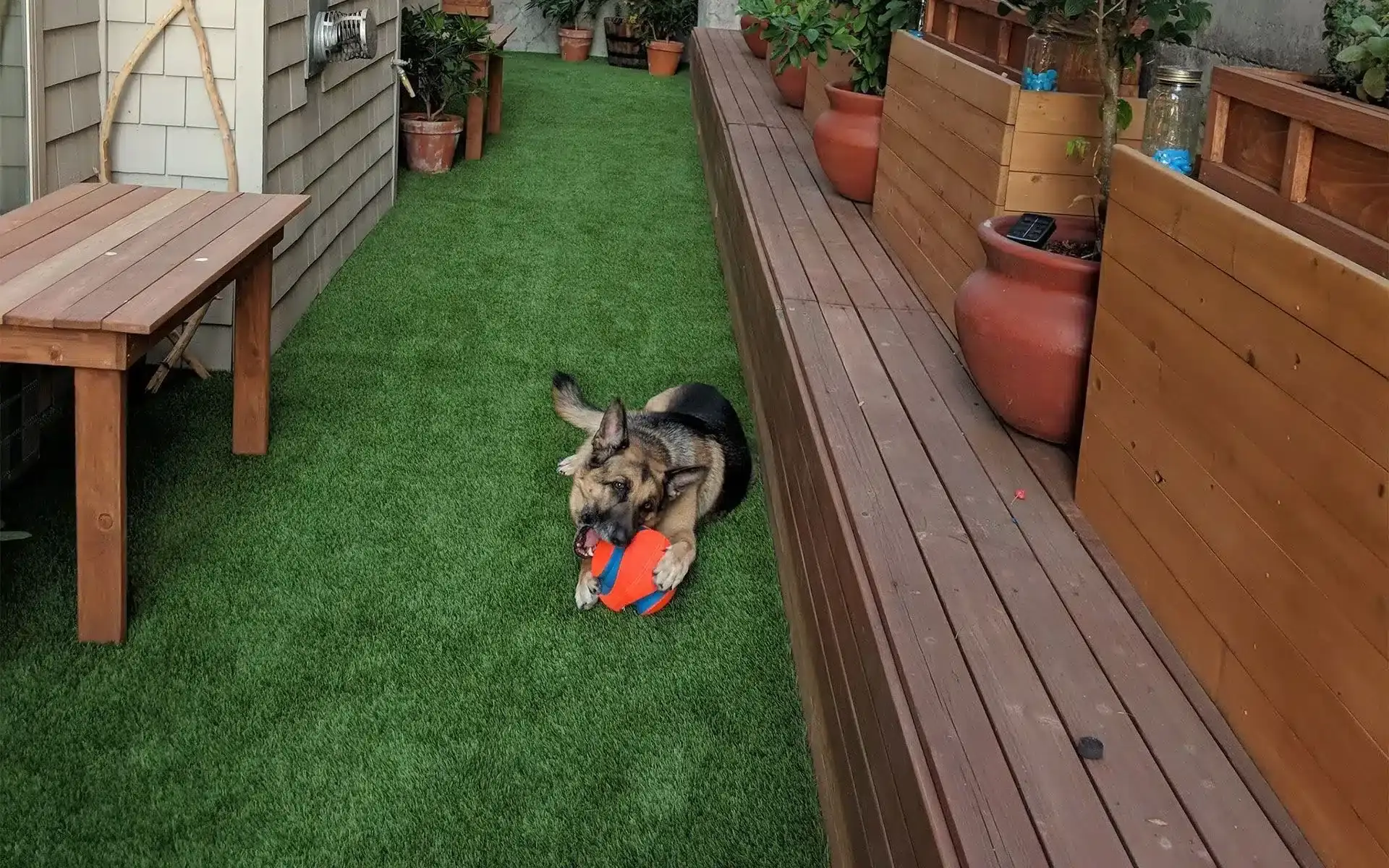
Narrow side yards used as dog access corridors between the front and back of the property — prone to mud and grass die-off without a hardwearing turf surface.
Multi-Pet Household Installations
Properties in Shadow Creek Ranch, Silverlake, and League City western neighborhoods with three or more dogs require higher-specification drainage and infill systems to handle daily use volume.
Why Pet Area Engineering Matters in Friendswood
A pet area that was not engineered for pet use will not perform like one that was. The difference between standard residential turf and a properly specified pet area installation is apparent within months — in drainage speed after a hosing, in odor control through a South Texas summer, and in how well the perimeter holds up under a dog that tests the edge daily. Turf Installation of Friendswood installs pet areas with the drainage engineering and infill specification those surfaces actually need. Families in athletic-household communities like Forest Bend and Heritage Park make long-term investments in their properties — and their pets deserve a surface that was built correctly.
What Affects Pet Area Installation Cost
Pet area pricing reflects the additional engineering requirements compared to standard residential turf. Key variables include:
Area Size and Configuration
Pet zones range from small dedicated runs to full backyard coverage, with pricing scaled to total square footage and layout complexity.
Number of Dogs and Use Intensity
Multi-dog households with heavy daily use require more robust drainage engineering and higher-volume infill systems.
Drainage Base Requirements
Properties with lower natural drainage grades or clay-heavy Friendswood soils need deeper aggregate base specification for adequate pet-use drainage.
Infill Specification
Antimicrobial and deodorizing infill systems are priced above standard silica infill but provide measurable odor control performance in active pet areas.
Perimeter Complexity
Complex fence lines, gates, and multiple hardscape interfaces require additional edging work and transition detailing.
Service Area Coverage
Pet area installation service covers Friendswood and surrounding communities: Forest Bend, Heritage Park, Annalea, San Joaquin, West Ranch, Polly Ranch, Oak Forest, Pearland, Shadow Creek Ranch, Silverlake, Manvel, Alvin, League City, Webster, Pasadena, South Houston, Sagemont, Almeda, South Belt, La Porte, Dickinson, and greater Houston south of Beltway 8.
Frequently Asked Questions
Does pet turf actually control odor?
Pet turf with antimicrobial infill and proper drainage significantly reduces odor compared to standard residential turf. The system works best when the drainage layer is engineered correctly and the surface is hosed down periodically. We explain the maintenance requirements before installation.
Can pet turf handle the heat in Friendswood summers?
Yes, when installed with UV-rated products and adequate drainage. Surface temperature in direct sun can exceed air temperature, which is manageable with periodic watering on hot afternoons. We recommend appropriate infill and pile choices that minimize heat retention.
How do I clean pet turf?
Solid waste is removed manually. Liquid waste drains through the system — rinsing with a hose accelerates drainage and dilutes any residual concentration. Periodic enzyme-based sanitization addresses bacterial buildup in heavily used zones.
Will my dogs dig through the turf edges?
Reinforced perimeter edging minimizes digging success. Some dogs are persistent diggers regardless — we discuss options including concrete perimeter borders or additional edge-securing methods for known diggers.
How long does a pet area installation take?
Most pet area installations complete in one to two days. Larger full-backyard conversions or properties requiring drainage base reconstruction take longer. We provide a timeline estimate after the site walk.
Is pet turf safe for dogs?
Yes. Pet-rated turf products are manufactured without harmful chemicals and tested for pet safety. We select products appropriate for residential pet use for every pet area installation.