Service Overview
Turf surfaces that were installed correctly still encounter damage. A seam that was bonded well eventually faces the cumulative stress of South Texas heat cycles, Gulf Coast storm loading, and repetitive foot traffic from youth athletes training in Forest Bend and Heritage Park backyards. A pet area in West Ranch handles daily wear that no standard residential turf was designed to absorb without periodic attention. An HOA common-area installation in Annalea gets subjected to heavy post-storm debris loads three or four times a year. Over time, even well-installed turf shows problems that require repair — and how those repairs are handled determines whether the surface recovers fully or continues to degrade.
Turf Installation of Friendswood handles turf repair across the full Friendswood ISD corridor and surrounding South Belt communities. We repair turf we installed and turf installed by others. The process is the same either way: assess the actual condition of the damage, identify the root cause, and repair in a way that addresses both the visible problem and whatever caused it.
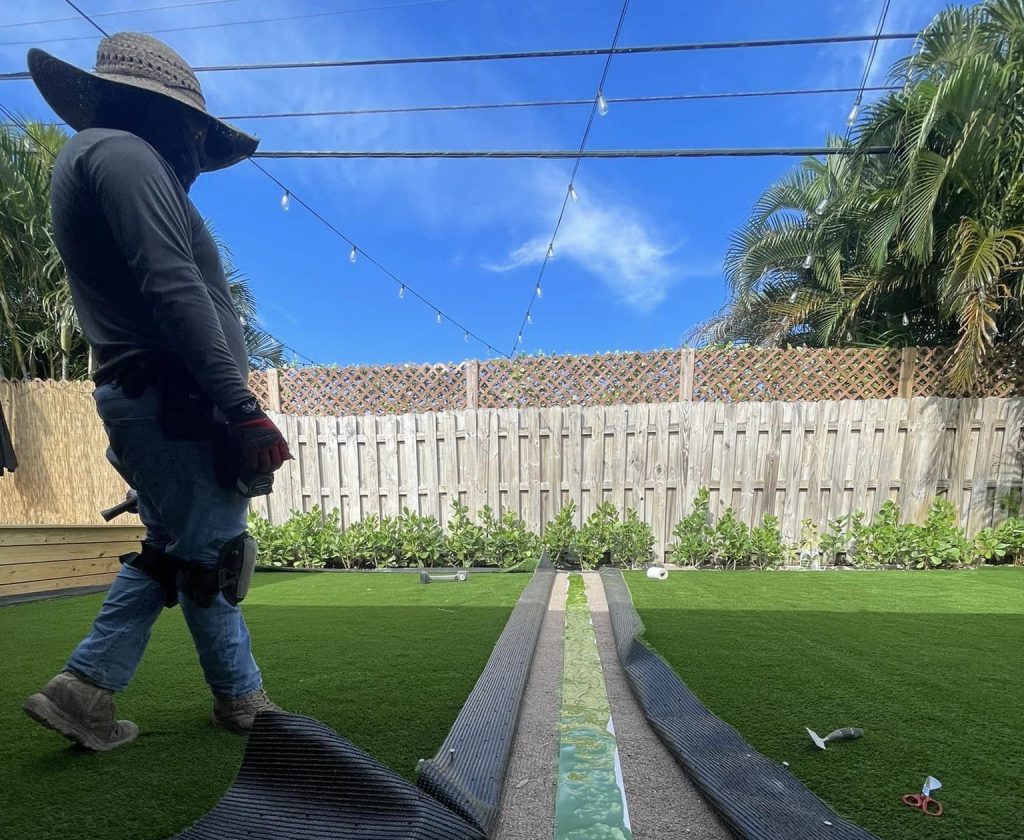
Seam separation is one of the most common repair calls in this climate. When seams are bonded incorrectly or the base beneath a seam shifts, the gap begins to open and widen. A small lifting edge that gets ignored becomes a tripping hazard and a drainage failure point. We rebond seams with proper adhesive, recheck the base beneath the seam for any settling issues, and verify the repair holds before the job is done.
Edge failures are the second most common issue, particularly in yards where irrigation zones run close to the turf perimeter or where kids and pets regularly stress the edge boundary. Perimeter bender board that has heaved or nails that have backed out leave gaps that collect debris and accelerate further edge separation. We re-secure or replace edging as required and address whatever drove the original failure.
Burned or damaged sections — from fireworks, concentrated heat sources, or chemical spill — are patched by removing the affected panel section and installing matching turf material. Panel matching for older installations requires material sourcing, which we evaluate during the initial assessment.
What Turf Repair Service Covers
Repair scope is determined by the damage type and root cause identified during assessment. Common repair items include:
Damage Assessment
Full inspection of the damaged area, surrounding turf condition, seam integrity, base stability, and drainage function before any repair work begins.
Seam Rebonding
Lifting or separated seams are cleaned, re-glued with proper adhesive, and weighted until the bond cures. Base issues beneath failing seams are addressed before rebonding.
Edge and Perimeter Repair
Failed bender board, heaved edges, and exposed nail-down perimeters are re-secured, replaced, or reset to restore edge containment.
Panel Section Replacement
Burned, torn, or severely damaged turf sections are cut out and replaced with matching material sourced to the original product specification where possible.
Base Correction Under Damage
Base settling, erosion channels, or compaction failure beneath damaged areas is corrected before the surface repair is completed.
Drainage Restoration
Drainage failures that contributed to or resulted from surface damage are corrected as part of the repair scope.
How Turf Repair Works
Repair work follows an assessment-first approach so the fix addresses the root cause, not just the visible symptom.
1. Condition Assessment
We inspect the damaged area, test base stability, check drainage function, and evaluate surrounding turf to understand the full scope of the problem.
2. Root Cause Identification
We determine whether the damage was caused by installation error, base failure, climate stress, mechanical impact, or normal wear — because the repair approach depends on the cause.
3. Base Preparation (If Needed)
If base settling or erosion contributed to the surface damage, base material is restored and compacted before the surface repair proceeds.
4. Surface Repair Execution
Seams are rebonded, edges are re-secured, damaged panels are replaced, and infill is redistributed in the affected zone.
5. Repair Verification
We test the repaired area, check drainage function, and verify the repair is stable before closing out the job.
Common Turf Repair Situations in Friendswood and Nearby Communities
Repair calls in Friendswood and the surrounding South Belt area tend to follow predictable patterns tied to climate events, property use, and installation age.
Post-Storm Seam and Edge Failures
Gulf Coast tropical systems and heavy rain events stress seam adhesive bonds and perimeter edging. Post-storm repair calls are common throughout Friendswood, Pearland, and Manvel.
Athletic Training Area Wear Zones
Backyard turf used for Friendswood ISD athlete training develops concentrated wear at the same spots repeatedly — between goal posts, at the base of pitching mounds, along running lanes.
Pet Area Damage and Edge Failure
Dogs work perimeter edges and dig at seam lines over time. Pet area repairs in West Ranch, Heritage Park, and Shadow Creek Ranch homes involve both edge re-securing and surface patch work.
HOA Common Area Restoration
Common-area turf in Annalea, Forest Bend, and Polly Ranch neighborhoods accumulates wear from frequent use and needs periodic repair to maintain appearance standards expected by HOA boards.
Why Correct Repair Matters in Friendswood
A turf repair that ignores the root cause of the damage repeats itself. If a seam fails because the base beneath it settled, rebonding the seam without correcting the base just delays the same failure. Turf Installation of Friendswood diagnoses before we repair. We find out why the damage happened, correct that condition, and then fix the surface. Friendswood homeowners and property managers in the Mustang-country corridor have high enough standards that they will notice a repair that falls apart in six months — and we are not interested in doing that kind of work.
What Affects Turf Repair Cost
Repair pricing depends on damage type, scope of base work required, and material sourcing needs. Key variables include:
Damage Type and Extent
Seam rebonding, edge repair, and small patch work are less extensive than full panel replacement or base reconstruction.
Base Condition
Repairs that require base correction or drainage restoration add material and labor beyond the surface repair itself.
Material Matching
Older installations may require material sourcing to match the original pile height and fiber type for patch work.
Access Conditions
Repairs in tight access areas, gated communities, or commercial properties with after-hours access requirements affect scheduling and staging.
Number of Damage Areas
Properties with multiple damage points across a larger surface area require more assessment and repair time.
Service Area Coverage
Turf repair service covers Friendswood and surrounding communities: Forest Bend, Heritage Park, Annalea, San Joaquin, West Ranch, Polly Ranch, Oak Forest, Pearland, Shadow Creek Ranch, Silverlake, Manvel, Alvin, League City, Webster, Pasadena, South Houston, Sagemont, Almeda, South Belt, La Porte, Dickinson, and greater Houston south of Beltway 8.
Frequently Asked Questions
Can you repair turf that another company installed?
Yes. We assess the surface condition and repair based on what the turf shows, regardless of who originally installed it.
How do you know if a seam can be repaired or needs replacement?
We evaluate the seam adhesion, the base condition beneath the seam, and the extent of separation. Seams that have pulled cleanly can usually be rebonded. Seams that have pulled the turf backing along with them may require panel replacement in that zone.
What if the turf is old and the original product is discontinued?
We assess material matching options based on pile height, color, and fiber type. For small patches, a close match is often achievable. For large panel replacement, we discuss the trade-offs before proceeding.
Can pet damage to turf edges be fully repaired?
Yes in most cases. We re-secure or replace edging, address any base exposure or compaction loss, and restore the perimeter seal. Repeat damage from the same pet activity may require additional edge protection strategies.
How quickly can repair visits be scheduled after storm damage?
We prioritize post-storm repair scheduling for properties throughout Friendswood and the South Belt area. Contact us after a significant weather event to assess scheduling availability.
Will a repaired seam be visible?
A well-executed seam rebond on turf with matching pile direction is typically not visible from normal viewing distance. We take care with pile direction alignment and adhesive application to minimize visibility.